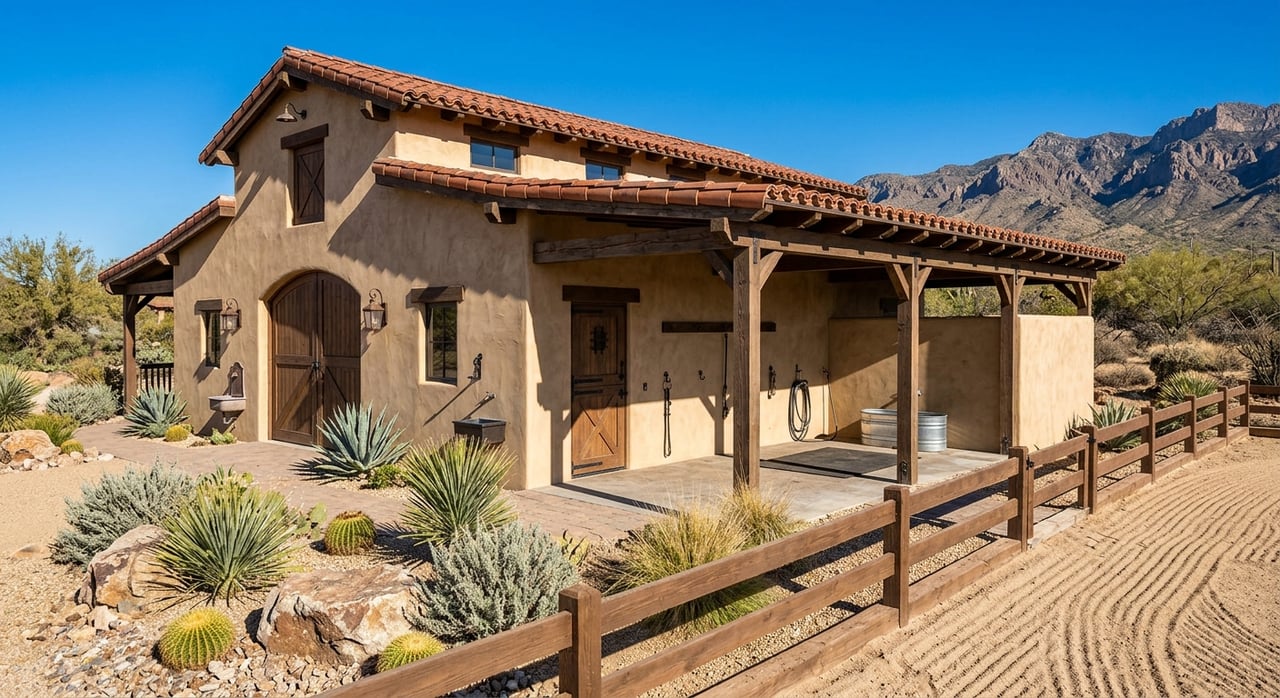
How to Sell Horse Property in Cave Creek
July 2, 2026
July 2, 2026
If you are selling an equestrian or acreage home in Cave Creek, you are not just selling square footage. You are selling how the land works, how the property lives day to day, and how it connects to the outdoor lifestyle that draws buyers here in the first place. When your marketing gets those details right, you give buyers the clarity they need and help your home stand out for the right reasons. Let’s dive in.
Cave Creek has a distinct identity, and that matters when you market a horse property or large parcel. The Town highlights open space, low-density living, western heritage, scenic views, quiet surroundings, and dark skies as part of the local appeal. In many residential areas, parcels are in Desert Rural zones where ranching and the possession of horses or other livestock are rights on parcels with at least two contiguous acres.
That means buyers are often looking beyond the house itself. They want to know whether the acreage is functional, whether horse use is practical, and how the property fits the lifestyle they have in mind. In Cave Creek, the land story is often the main story.
Not all acreage feels the same to a buyer. A parcel may be large on paper, but buyers still want to know how much of it is actually usable for horses, storage, parking, turnout, or circulation. Clear marketing should answer that question early.
Your listing should explain the property in practical terms. Buyers often want details about barns, stalls, tack and feed storage, turnout areas, arenas or round pens, shade, fencing, drainage, gate placement, trailer parking, and room to maneuver. Those details help move the conversation from “large lot” to “functional horse property.”
In Cave Creek, visuals matter as much as words. The Town’s planning guidance notes that a site or plot plan should show property size and shape, buildings, fences, garages, accessory structures, utility locations, easements, and topography. That makes a strong case for using a property diagram or site sketch in your marketing package.
A good layout helps buyers understand the property quickly. It can show where the barn sits in relation to the house, how trailers enter and turn, where turnout space is located, and whether there are slopes, washes, or easements that affect use. For acreage homes, this level of clarity can make a listing far more compelling.
Trail access is a major value point in Cave Creek. The Town says public access extends to roughly 50 miles of non-motorized trails, with links connecting neighborhoods to the Town Core, Spur Cross Ranch Conservation Area, Cave Creek Regional Park, Desert Foothills Land Trust properties, and the Tonto National Forest. County and Forest Service sources also confirm horseback riding access in key regional recreation areas.
That said, trail marketing needs to be accurate. Some properties may abut trails, some may be near trail systems, and some may rely on recorded easements for access. Since the Town notes that many properties abut or are crossed by trails and that it does not keep private access easement records, buyers should get a precise explanation of what is public access, what is adjacency, and what is documented through recorded rights.
Buyers drawn to Cave Creek are often looking for something different from a typical subdivision setting. The Town’s buyer notice points to a quiet rural environment, Sonoran Desert wildlife, dark night skies, and a road and trail network that reflects a more open, low-density pattern of living. That context shapes how buyers evaluate a property.
Your marketing should speak to that lifestyle in factual, local terms. If the setting offers open desert views, access to nearby trails, or a layout that supports outdoor use, those points deserve attention. At the same time, practical realities matter too, including low-speed rural roads, drivers yielding to horses and livestock, and weather events that can affect roads, trails, and washes.
One of the most important steps in marketing a Cave Creek horse property is confirming exactly where the property is and what rules apply. The Town states that having a 85331 ZIP code does not necessarily mean the home is within Town limits. That distinction matters when you describe zoning, permitted uses, and local oversight.
Before marketing a home as horse-friendly or equestrian-ready, verify the jurisdiction and zoning. The Town directs owners to its zoning map and planning department for boundaries, zoning changes, and land-use questions. It also notes that CC&Rs may be more restrictive than zoning, and that the Town does not enforce private deed restrictions.
Acreage buyers usually ask more utility questions than buyers in a standard subdivision. In Cave Creek, those questions are especially important because sewer service is not available to all areas, septic permits are handled through Maricopa County Environmental Services, and well permits come from the Arizona Department of Water Resources. Those systems can affect how buyers view convenience, maintenance, and long-term planning.
Water is also a major local topic. The Town says it is 95% dependent on Colorado River water delivered through the Central Arizona Project and expects a 25% reduction in CAP deliveries starting in 2027, with some uncertainty about the final cut. For sellers, that means buyers may ask detailed questions about irrigation, stock tanks, landscape maintenance, leak detection, and whether the property is served by town water or a private well.
Buyers often appreciate honesty about how rural property ownership works in Cave Creek. The Town notes that it does not provide municipal trash collection and does not assess a municipal property tax. It also offers a free defensible-space evaluation through its fire-protection arrangement.
These points do not make a property more or less desirable on their own, but they do shape buyer expectations. When your marketing helps buyers understand operations and upkeep, you build trust and reduce confusion later in the process.
For equestrian and acreage homes, interior photos alone are not enough. Buyers need to see scale, circulation, improvements, and how the parcel is laid out. Wide exterior photography, drone images, and detailed shots of horse facilities usually do more heavy lifting than generic lifestyle images.
In Cave Creek, strong visuals often include full-parcel aerials, photos of barns and stalls, images of gates and fencing, turnout areas, shade structures, storage, and any arena or round pen. Twilight photography can also be effective because dark skies are part of the Town’s identity, and outdoor lighting is regulated to be fully shielded and directed downward.
Generic large-lot language tends to miss the mark in Cave Creek. Buyers do not just want to hear that a property is spacious, peaceful, or unique. They want clear answers to practical questions that affect daily use.
The strongest listing copy usually addresses points like these:
When you answer those questions directly, you help serious buyers picture ownership with fewer assumptions.
A well-marketed Cave Creek equestrian property should feel complete before a buyer ever schedules a showing. The more clearly you present the land, improvements, and operational details, the more confidence buyers can bring into the process. That confidence can translate into better engagement and stronger positioning in the market.
A strong marketing package may include:
This is where thoughtful strategy matters. Sellers benefit most when the property is presented not just as a beautiful home, but as a well-understood piece of land with real function and local context.
If you are preparing to sell an equestrian or acreage home in Cave Creek, the right marketing can make the property easier to understand and more compelling to the buyers most likely to value it. For tailored guidance, professional listing preparation, and high-quality marketing support, connect with Annie Cole.
October 22, 2026
October 15, 2026
October 8, 2026
October 1, 2026
September 24, 2026
September 17, 2026

September 10, 2026
September 3, 2026
September 3, 2026
Searching for homes and real estate in Scottsdale? You've come to the right place. Curious about Scottsdale luxury properties for sale? So am I!