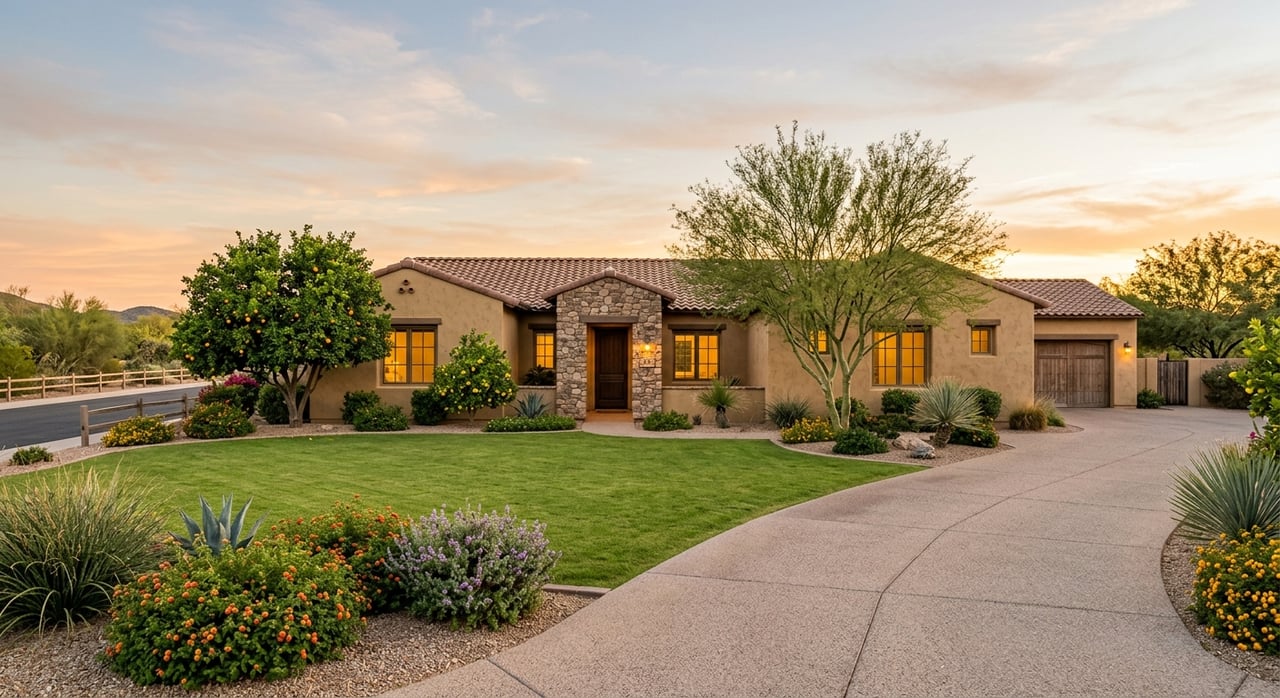
Arcadia Phoenix Remodel or Rebuild? How to Decide
June 18, 2026
June 18, 2026
If you own property in Arcadia, the biggest question may not be what to do with the house. It may be what the lot can truly support. That can feel overwhelming, especially when you are weighing cost, timeline, permits, and resale potential all at once. The good news is that a smart remodel-or-rebuild decision usually becomes clearer once you understand the lot, the jurisdiction, and the real building envelope. Let’s dive in.
Arcadia is not just another subdivision with uniform homesites and predictable rules. The area is rooted in a historic estate-lot pattern, with larger parcels and a legacy tied to rural estate residences and citrus-orchard ambitions.
That history matters because, in Arcadia, the land often carries as much weight as the house itself. If you are deciding whether to renovate or start over, the lot size, shape, setbacks, easements, and jurisdiction can have a major impact on what makes sense.
One of the first things to confirm is whether your parcel falls under Phoenix or Scottsdale. Arcadia includes areas associated with both cities, and that means the review process, permit path, and project details can differ depending on the exact property.
Phoenix routes single-family residential permits, inspections, and historic preservation applications through SHAPE PHX. Scottsdale uses SPUR for projects that require a plan or permit as of January 6, 2026. Before you spend serious money on plans, it helps to know which city rules apply to your lot.
In many cases, remodeling is the better play when the existing home has a solid structure and the layout can be improved without major structural work. If the home already sits well on the lot and your goals fit within the current setback, height, and lot-coverage limits, a remodel may offer a simpler path.
This can be especially appealing if you like the character of the existing home and want to update kitchens, baths, living spaces, or indoor-outdoor flow. In a neighborhood like Arcadia, where homes often have established placement and mature lot appeal, keeping the shell can sometimes preserve both charm and momentum.
A remodel is not the same as skipping permits. In Phoenix, permits are required for new homes, remodels or additions, demolition, patio covers, fences and walls, and similar work. The city also requires grading and drainage review for residential construction projects.
If the home is on the Phoenix Historic Property Register or located in a historic district, exterior work may require a Certificate of Appropriateness or a Certificate of No Effect. That can affect both timing and design choices, so it is worth checking early.
In Scottsdale, many substantial home improvements also require permits. That includes additions, patio covers, carport enclosures, walls, fences, retaining walls, accessory buildings, and room additions.
Scottsdale also notes that most single-family electrical, mechanical, and plumbing work does not require plan review and can be handled as a minimum permit. For homeowners doing more of a refresh than a full rework, that can make lighter improvement projects more manageable.
For some Arcadia owners, the best answer is not a full remodel or a full rebuild. Phoenix allows two accessory dwelling units in addition to a primary single-family detached home on qualifying lots, with a possible third in some circumstances.
That does not mean every lot will work for that approach. You still have to account for zoning, lot coverage, and the physical capacity of the site. Still, it creates a possible value-add strategy for owners who want to increase utility without removing the main house.
A rebuild often becomes the better option when the existing home is functionally outdated, structurally compromised, or difficult to improve without near-new-construction costs. If you are changing almost everything anyway, the disruption and expense of preserving the original structure may not pay off.
In Arcadia, rebuild decisions are often driven by the lot’s potential. If the parcel can support a significantly better home and the current house limits what you can do, starting fresh may create a clearer long-term result.
Even with a teardown, the lot sets the rules. Setbacks, easements, drainage concerns, utility issues, and historic review can all shape what is actually buildable.
Scottsdale specifically notes that many subdivisions have amended development standards that differ from base zoning. The city also explains that a setback request can help identify the standards and easements that create the true building envelope or developable area.
That is a key point in Arcadia. A lot may look generous on paper, but the usable footprint for a new home can be more limited than expected.
If a rebuild is on the table, demolition is not a casual first step. Phoenix requires a demolition permit before any work can begin, and historic properties may trigger added review.
Scottsdale requires demolition permits when demolition is not tied to new construction. If demolition is part of a rebuild, Scottsdale can review demolition with the new-construction documents at the same time.
Scottsdale also states that its Historic Preservation Commission reviews and approves exterior alterations and demolition requests for buildings on the Scottsdale Historic Register. For owners of older or notable homes, that can be a major decision point.
A rebuild can give you a cleaner slate, but it can also introduce design requirements that do not apply in the same way to a smaller remodel. In Phoenix, single-family design review is intended to improve design diversity, reduce garage visibility from the street, and emphasize the main entrance.
For a custom home, that means the front elevation and streetscape presentation can influence approvals and the final design. In practical terms, the house is not just being reviewed for size and placement. It may also be reviewed for how it presents on the lot.
If you are stuck between the two options, a practical framework can help. In Arcadia, the question is less about which idea sounds better and more about which one works better for your lot, your budget, and your long-term goals.
A remodel is often the stronger option when:
A rebuild is often the stronger option when:
Before hiring architects or pricing a major project, it helps to do a few key checks. These early steps can save time, money, and disappointment.
Start by verifying:
Scottsdale recommends using its setback map and, if needed, a setback request. The city also recommends a boundary survey for homeowners planning site modifications.
Phoenix residents can confirm zoning and lot size through My Community Map and the Maricopa County Assessor, which the city points to for official lot size and structure dimensions. These are useful starting points when you are trying to understand what is possible on a specific parcel.
If your long-term plan includes changing lot lines, combining parcels, or splitting a larger lot, look into that before finalizing design plans. Phoenix has a formal process for lot splits, lot combinations, and lot-line adjustments, along with fees and possible added review.
The city also notes that hillside review may be required if slopes are 10 percent or greater, and that dedications or zoning variances may also be needed. On an Arcadia lot, those land questions are best answered early, not after you are attached to a plan.
Whether you remodel or rebuild, the decision should support the life you want now and the marketability you may want later. In Arcadia, buyers often pay close attention to lot utility, home placement, and how well the improvements fit the property.
That means your project is not just a construction choice. It is also a positioning choice. A well-planned remodel can preserve charm and improve function, while a well-executed rebuild can unlock the full potential of a strong parcel.
There is no one-size-fits-all answer in Arcadia. Two homes on nearby streets can have very different zoning realities, setback conditions, easements, historic considerations, and rebuild opportunities.
That is why the smartest first move is usually not choosing sides between remodel and rebuild. It is understanding the lot well enough to know which path truly creates more value.
If you are weighing what to do with an Arcadia property, a local, lot-first strategy can make the decision much clearer. When you are ready to talk through resale potential, buyer demand, and how your choices may affect value, connect with Annie Cole.
October 15, 2026
October 8, 2026
October 1, 2026
September 24, 2026
September 17, 2026

September 10, 2026
September 3, 2026
September 3, 2026
August 27, 2026
Searching for homes and real estate in Scottsdale? You've come to the right place. Curious about Scottsdale luxury properties for sale? So am I!